

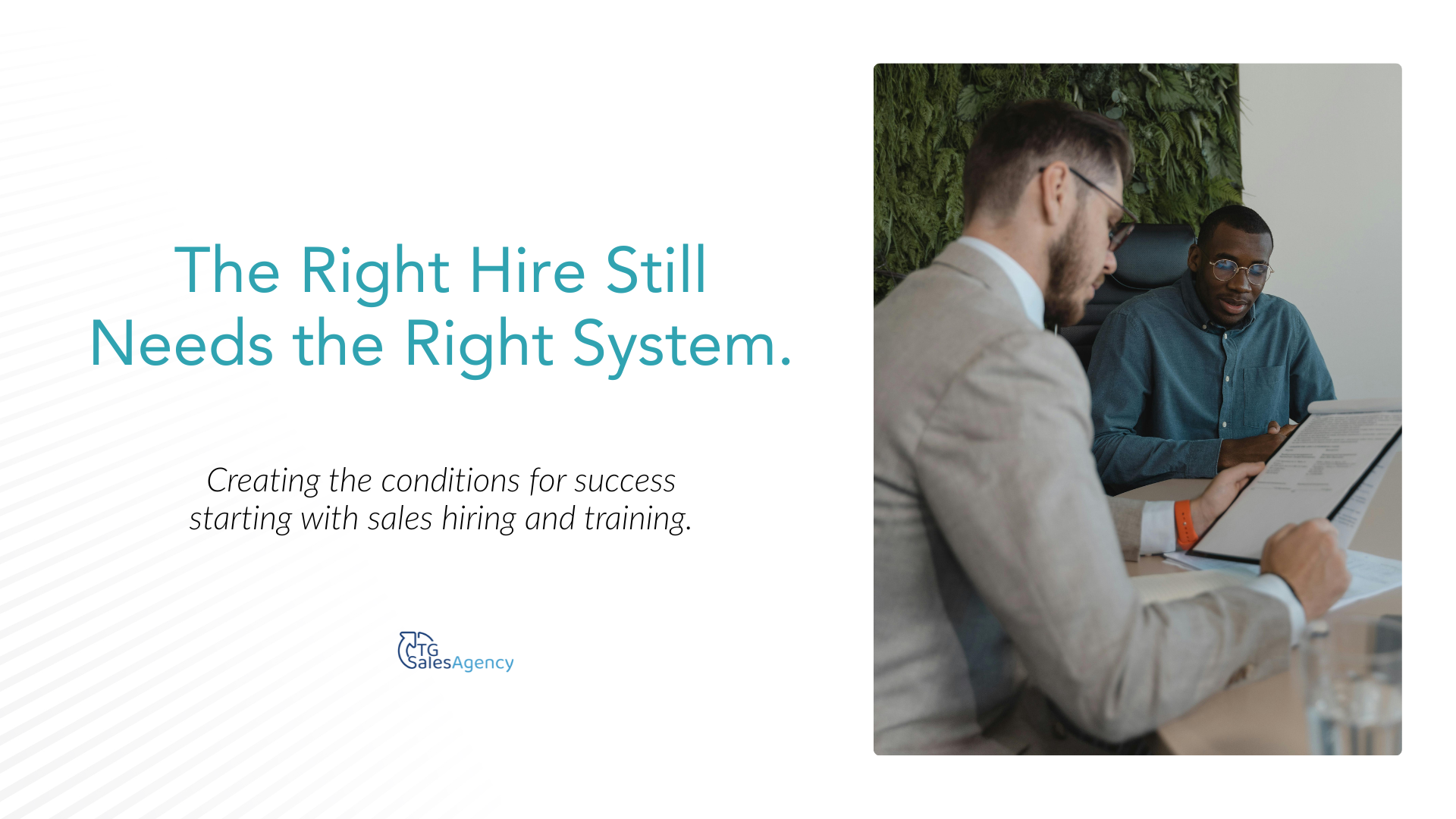

Hiring someone for a sales role is only the beginning.
A lot can happen between the time a candidate accepts an offer and the time they are expected to start producing results. After working with new salespeople and sales teams over the years, I’ve seen problems come from both sides.
Sometimes the person coming in simply isn’t prepared for the job. Other times, the company hasn’t created the environment or process that gives the new hire a fair chance to succeed.
The biggest lesson?
Many of these problems can be identified before the first day of training.

The First Red Flag Can Happen Before You Hire
One of the biggest mistakes I’ve seen companies make is hiring someone with minimal experience and assuming training will solve everything.
Training can teach a person your product, sales process, messaging, and tools. But it cannot instantly create strong work habits, communication skills, discipline, or the ability to handle a sales conversation.
That doesn’t mean every new salesperson needs years of experience.
It means companies need to establish minimum requirements for the specific role before they start interviewing.
Can the candidate communicate clearly? Do they have the basic technical skills required? Can they work independently? Do they have a suitable environment for the job? Do they have adequate equipment and access to current tools? Can they demonstrate that they understand what a sales role actually requires?
And the responsibility doesn’t stop there. Sales professionals also need to take responsibility for keeping up with technology.
The tools available to sales teams are changing constantly. CRM platforms, prospecting tools, AI, automation, communication platforms, data providers, and other sales technologies can all change how a salesperson researches, communicates, follows up, and manages their pipeline.
A salesperson doesn’t need to be an expert in every new tool that comes along. But they should be willing to learn, adapt, and regularly understand what technology can do for them.
If someone expects to use the same tools and methods they learned years ago without keeping up with how the industry is changing, they can quickly become less effective.
Companies have a responsibility to provide the right tools and training. Salespeople have a responsibility to learn how to use them.
The Work Environment Matters More Than People Think
Salespeople need the right tools and environment to perform at their best.
I’ve seen new employees come into roles without proper equipment, reliable technology, or a quiet and comfortable place to work.
That creates problems before training even begins.
If someone is expected to spend hours on calls, attend meetings, research prospects, and communicate professionally with potential customers, their basic setup needs to support those responsibilities.
This is especially important with remote sales teams.
A good salesperson working in a poor environment can easily look like a bad salesperson.
Then There’s the Company’s Side of the Equation
The responsibility doesn’t stop with the new hire.
Sometimes the company has no clearly defined sales process for the person to follow.
Or the process exists, but nobody can explain why it works.
This is becoming an even bigger issue because technology, buyer behavior, communication channels, and sales tools continue to change.
A process that worked two years ago may not work the same way today.
That doesn’t mean companies should constantly throw everything away and start over. It means they need to measure what is happening and update the process when the data and market conditions tell them to.
Training someone on an outdated process isn’t really training. It’s passing along outdated habits.
Build the Checklist Before You Build the Team
The right person can still struggle inside a broken system. And the best sales process in the world won’t compensate for hiring someone who isn’t equipped for the role.
This is why I believe the first checkpoint should happen before hiring.
Create a basic list of requirements that every candidate must meet before they are seriously considered.
The checklist can include hard skills, soft skills, education, industry knowledge and other requirements that will help the person succeed at your company. This will help ensure both sides are prepared and improve the chance of success after hiring.
Are you looking for more ways to hire and train the right people for your sales team? We can help and are happy to discuss ways to do so and move your business goals forward. Simply book a time to connect with us here.
About the Contributor, Pedro Lozano
Pedro Lozano is a Campaign Manager at TG Sales Agency with hands-on experience in sales strategy, campaign execution, business development, quality assurance, sales enablement, and training. Before joining TG, Pedro worked in sales development at Ventes Recruiting and supervised eCommerce operations and teams at Walmart Mexico. Since joining TG in 2022, he has progressed through sales and marketing, business development and quality assurance, and campaign management roles.